Thursday, June 21, 2012

The World's Most Advanced Study Bible - for FREE!

Have you ever read something in the Bible, and thought, "Hmm... I wish I could learn more about that? 
Have you ever wondered:
  • What St. Peter means when he says Jesus "went and proclaimed to the spirits in prison"? (1 Peter 3:19)
  • What the Temple that Jesus visited in Jerusalem looked like? 
  • What the number 666 might actually refer to in Rev 13:18?
Nothing can replace reading your Bible and asking God to open your heart to his message. But sometimes, having a tool like a study Bible can help you gain insights you would have just from reading the text.

Introducing the Faithlife Study Bible
Logos Bible Software (my "other" job) has just announced this exciting new resource for studying and understanding the Bible. Check out the video:

FSB works best on a tablet like an iPad, 
but you can also use it on a smartphone, 
installed to your computer, or just online. 
I've been using the FSB for a few months now, and it has been become my first line of study when I come across a verse I don't understand. It has thousands of study notes, hundreds of pictures and videos, and in-depth articles with the included Lexham Bible Dictionary. I highly recommend it.

Share your study.
You can also use Faithlife to connect with your church or study group.  Set up a reading plan to study the Bible together.  Make a note on a verse, and the rest of your group will see it when they read that passage.
When you sign up for Faithlife, make sure to join us at faithlife.com/tfcnw - we will be using it in the future to read through Scripture together!

Best of all, it's FREE. 
The FSB will eventually be subscription-based, but you can use it until March 2014 for absolutely nothing. Just use the coupon code FREE at http://faithlifebible.com/!

Thursday, June 14, 2012

Support TFC this Summer!

This time of year, the TFC bank account often runs low. Bible Quizzing is out of season, people have other things on their mind, and donations to TFC often drop in the summer.  However, we still have the same expenses; we are still hard at work with quiz demonstrations, Monday night youth meetings, and other projects.

Your continued financial support over the summer is vital to our ministry. Any amount helps! Visit tfcnw.org/donate for a one-time donation, or setup an automatic payment starting at only $10/month. And thank you for your generosity!


Friday, June 8, 2012

The Mark of Spiritual Maturity

source: biblia.com
How do you know if you are growing in Christ?  Our unity with other believers is perhaps the most important way to measure spiritual maturity.

It's too common for us in the American church  —  in our individualistic culture — to focus exclusively on our personal relationship with Jesus. We forget or overlook that  almost all of the New Testament's teaching about faith is in terms of community of other believers.

The biblia.com verse of the day reminded me this morning of one of my favorite passages in the Bible:
until we all attain to the unity of the faith and of the knowledge of the Son of God, to mature manhood, to the measure of the stature of the fullness of Christ
Ephesians 4:13 (ESV)
This is by no means the only place the NT teaches the importance of relationships in the Church, but the emphasis here is especially easy to see. 

The purpose is to reach maturity... the "fullness of Christ."

But how do I do that?
On my own?
Spending more time with Jesus?

Well, no. At least, that's not all. Don't get me wrong; the Greatest Commandment is to "love the Lord your God with all your heart and with all your soul and with all your mind." (Matt 22:37)  But that's not enough. There is a reason that the second is "love your neighbor as yourself:" You can't have one without the other.

Let's look at the rest of the passage:

1 I therefore, a prisoner for the Lord, urge you to walk in a manner worthy of the calling to which you have been called, 2 with all humility and gentleness, with patience, bearing with one another in love, 3 eager to maintain the unity of the Spirit in the bond of peace. 
4There is
    one body and
    one Spirit
       — just as you were called to the
      one hope that belongs to your call —
     5one Lord,
    one faith,
    one baptism,
    6one God and Father of all,
     who is over all and through all and in all. 
7 But grace was given to each one of us according to the measure of Christ’s gift. ... 11 And he gave the apostles, the prophets, the evangelists, the shepherds and teachers, 12 to equip the saints for the work of ministry, for building up the body of Christ, 13 until we all attain to the unity of the faith and of the knowledge of the Son of God, to mature manhood, to the measure of the stature of the fullness of Christ, 14 so that we may no longer be children, tossed to and fro by the waves and carried about by every wind of doctrine, by human cunning, by craftiness in deceitful schemes. 15 Rather, speaking the truth in love, we are to grow up in every way into him who is the head, into Christ, 16 from whom the whole body, joined and held together by every joint with which it is equipped, when each part is working properly, makes the body grow so that it builds itself up in love. 
Ephesians 4:1–16 (ESV)

Apart from the fact that the whole picture of "Body" is one of togetherness, notice how many "unity" words there are here: "with one another... unity... bond... one, one, one... building up... unity..."  Wow, do you think there's a message here? The author even says how to have unity with others: verses 2 and 3.

If you want community with people, you must have humility, patience, and love... which come from Christ.
If you want to grow up in Christ, you also have to grow together with his followers.

Friday, May 18, 2012

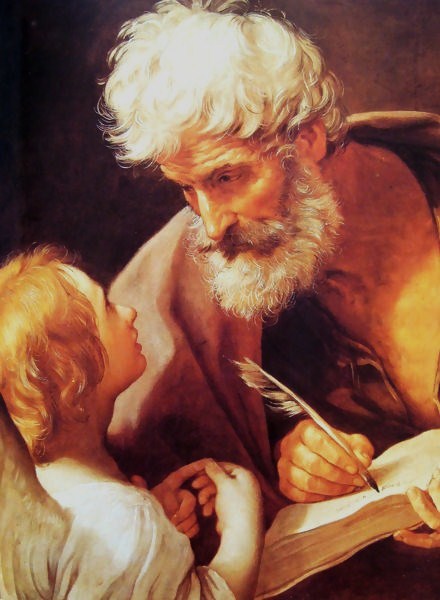
Learning from Matthew

 Matthew study starting in June at TFC; notes about the ESV.

Attention Bible quizzers! Just because its summer, doesn't mean that you can't get a head start on next year's material. Here's some need-to-know information about our upcoming quiz season.

1. This season covers the Gospel of Matthew

Don't just memorize; learn it and live it. 
In our Summer in the Parks at TFC, we will be looking at the book of Matthew chapter by chapter. Adam will be working together with student teachers to examine the themes and lessons that set Matthew apart from the other gospel accounts. The series starts June 4 at Riverside Park in Everson, and we'll be at a different park each Monday night. Even if you aren't ready to start memorizing yet, this is a great opportunity to understand Matthew like you never have before!

Already prepping for fall?
Here's what we'll quiz on for the Kickoff Retreat on Sept 7-8 [edit] Sept 14-15:
  • First-time quizzers: Matthew 4 (25 verses)
  • Returning quizzers: Matthew 5 (48 verses)
The schedule for the rest of the season is posted at www.tfcnw.org/quiz/meet-material.


2. We're switching to the ESV!

Why the change?
The NIV has never been a strict word-for-word translation. Since Greek words and idioms often don't really have an English equivalent, the translators thought it more important that the ideas be understood, and so they used a thought-for-thought (or, "dynamic equivalence") philosophy of translation.  Following this translation style, when they revised the NIV in 2011, they included some changes to make some wording more gender inclusive -- for example, using "all people" instead of "all men," or "brothers and sisters" rather than simply "brothers."   The NIV translators may have honestly tried to reflect what the original writers meant; but the fact is, they changed or added words that aren't actually in the original language, and sometimes this can change the meaning as well.

The Bible Quiz Fellowship committee feels this takes the "thought-for-thought" style too far, and it's important to preserve the original, inspired words that God recorded through the biblical authors.  With that (and some secondary reasons) in mind, the BQF committee voted in May 2011 to adopt the English Standard Version, which is much closer to word-for-word translation.  You can learn more about the decision from the statement on the BQF website.

2011 Edition
When you start studying Matthew, make sure you use a 2011 edition of the ESV by looking at the copyright date at the front of your bible. Or, just pick up a quiz book at the TFC office for $6.

Older versions of ESV (2001 or 2007), are a little bit different. Not much -- just a word here and there -- but it will be enough to throw off your word-perfect memorization for quizzing. If you already have an older ESV you'd like to study from, you can download and print this list of changes. 


Friday, April 20, 2012

How to Understand the Bible, Part 3 of 3

This week, we've been asking how to understand the Bible better. Best answer: Listen to the Holy Spirit first, then check your work with these questions.

3. How has it been traditionally understood by the Church throughout history?

You've probably heard this before: Anytime someone says they have a fresh/new/innovative teaching of Scripture, you should run the other way. It's one thing to have a fresh understanding of traditional teaching; it's important to renew and dig deeper into the truth the Bible offers. It's quite another thing to "find" new teachings in the Bible that don't line up with doctrines that the universal Church has long held.  That's why, even in personal study, you should ask how the Church as historically understood a topic or passage.

In some ways, this is the most difficult of the three "checks". For one thing, the Church has a long history, and some people dedicate their whole careers to studying the teachings of the Early Church Fathers and the development of theology over the centuries.  And it hasn't developed exactly same in all parts of the Church; there are so many denominations precisely because, somewhere along the line, someone in the church disagreed about the meaning of a particular passage or doctrine, and started their own branch.

However, I believe we are called to focus more on our agreement than our disagreement (see Ephesians 4), and there is a lot we can agree on.  To begin with, I hope you have a Bible-teaching church, so you have a good foundation of biblical education. (If not, perhaps C.S. Lewis' Mere Christianity would be a good start. Also, find a new church.)  If you have questions about a passage or someone's teaching, don't be afraid to talk ask your pastor about it. Or for that matter, feel free to ask me; I don't have a seminary degree, but if I don't know the answer to something, I promise to find out together with you.

There a lots of ways you can research the answer on your own, too. It's not hard to find historic creeds, or statements of faith, that are accepted by every branch of the Christian Church.  Bible commentaries can also be useful for understanding the theological implications of a given text. There are a lot of good ones in print, and many of the older ones are now available for free online.

All of these tools are good helps.  But after everything, I would be remiss not to end where we started:  the best way to study the Bible is... to study the Bible. There is no substitute for careful, broad, and frequent reading of the Word of God.


What about you? How do you make sure that what you are learning is theologically correct?


Earlier this week:

1. How does this verse fit with the rest of the Bible?
2. What did it mean to the original audience?