Teens For Christ Blog: Who is Jesus? Who is Jesus to You?
Thursday, September 12, 2013

Wednesday, September 11, 2013
Who is Jesus? Who is Jesus to You?
On Monday nights we have begun a series of looking at Who Jesus Is - Who He is to you personally, and who we are in Christ.
Here is recap of the list we looked at Monday night. We will be taking the next few weeks looking at other names that describe Jesus.
Almighty - Jesus is all powerful - Revelation 1:8
Nothing is beyond His reach or impossible for Him.
Author and Finisher - Jesus is our start and finish - Hebrews 12:2
Jesus was at the beginning of creation and will be there to the end. He is both the author of all that is and the one who sees His creation through to the end.
Beloved - Jesus is at the center of God's love - Ephesians 1:6
Chris is the Beloved Son of the Father, and as such, the desire of all people who love God. All who love God will be drawn to Jesus.
Bread of Life - Jesus is our Sustenance. John 6:32-35
Jesus was born in Bethlehem, which means," the house of bread." He is our spiritual nourishment and the sustenance of the world. All things are kept alive by Him.
Bridegroom - Jesus leads and cares for us. Matthew 9:15, John 3:29, & Revelation 21:9
Jesus is the bridegroom and His church is the bride. He is the head of the church and cares for her.
Chief Cornerstone - Jesus is our rock of safety. Isaiah 28:6, Psalm 118:22, Ephesians 2:20, & 1 Peter 2:6
Jesus is the cornerstone which religious leaders rejected, but which God chose from eternity to build His house, a temple of living stone! We can rely on Him as our solid foundation.
Door - Jesus is our gateway. John 10:9
Jesus is our opening to God. He is the only way to heaven.
Emmanuel/Immanuel - Jesus is God With us. Isaiah 7:14, Isaiah 8:8 & Matthew 1:23
Jesus was born on earth as a real human being. He entered space and time to become one of us so we might be with God forever.
As we learn more of who He is and what He has done for us, we will begin to look at Who we are In Him.
In our small group time, some of the teens described Jesus as:
My Friend,
My Comforter
My Super Hero
My Redeemer
The one who gives me Peace
Someone I can tell everything to
The One who helps me
What comes to your mind as you read over these names that Describe who Jesus Is? What has Jesus done for you today?
We looked at video by Mike Donehey from 10th Avenue North that described Jesus offering the cup of wine to his disciples at the last supper and how that parallels the Jewish custom of the day of a Jewish man proposing to a woman.
He describes how the Jewish man would offer a something (a price that had to be paid) for the CHANCE to propose.
When we think about it - God sent his only Son (The Bridegroom) to be the price that would be paid for the Chance that we would become His Bride.
Jesus dying on the cross does not guarantee that we will automatically become His Bride. The price Jesus paid made a way for us to accept what He was offering.
How many of us would offer something so precious for JUST A CHANCE at something?
Will we be ready when the Bridegroom comes?
Tuesday, July 31, 2012
Outdoor Movie: Reaching our community
 |
| 2-story screen? Yes, please. |
What started as a night just for fun quickly turned into an outreach event, and inspired a way to serve and connect with the community around us.
An Experiment
Last Tuesday night, we had our first-ever outdoor movie at TFC. Weather-wise, we had a perfect night to set up on the lawn outside of New Life Fellowship’s gym; it was warm, but the skies were clear – perfect for stargazing or catching the occasional meteor. Teens gathered around the firepit, waiting for dusk to fall, with cartoons playing in the background. (Sidenote: Can you believe that some didn't know what Talespin was?)
As soon as it was dark, Jason Metzger’s video projector turned the side of the building into a crystal-clear 14-foot screen, to watch the 1982 classic E.T., while the sound was broadcasted to portable FM radios scattered among the moviewatchers.
The most interesting thing about the night though, was the attention we drew from neighbors. I went and talked to one nearby group of teenage girls to ask if they’d like to come watch the show. “We’re scared,” one of them said. I laughed and told them we are nice people.
In the end, several young people joined us for the movie and shared in our s’mores, and we had the opportunity to share a little about Teens for Christ and invite them to get involved. This simple touchpoint inspired a way to reach out to the homes nearby.
An Inspiration
On Friday, Aug 31, TFC will be coordinating with New Life Fellowship to sponsor a Community Event for Hinote’s Corner and the surrounding neighborhoods. We will show a family-friendly movie, promote upcoming events at TFC and New Life, and encourage the community to build relationships with their neighbors.
A Call to Action
Please pray for this event. We want it to be both a service and an outreach, and we want the community see the love of Christ reflected in our actions.
We also need volunteers to help with the logistics of an undertaking of this size. Please contact us if you would like to help with delivering promotional flyers, contacting local businesses for sponsorship, or helping with supervision and organization on the evening of the event.
Finally, you can help with your ongoing financial support of TFC. We have many ideas that we just can’t implement right now, either because I don’t have time in my work week (I currently have a second job to supplement my income at TFC), or because we just don’t have the resources in our already-strained budget. Thank you so much to those of you who regularly support TFC with your faithful giving. If you don’t already, please consider a monthly donation to continue the work of our ministry.
Donate Now
Thursday, July 26, 2012
11 Weeks Early: Helping the Powells

Last month, their new son Micah was born 11 weeks premature. He's going to be fine, but they still have a long road ahead of them.
Please join us in prayer over his recovery and read the letter below, from Gabe's sister Elaine, for ways to help the family.
Dear Family,
Friends, and Body of Christ,
On June 27th
Micah Nathanael was born at UW Medical Center at 29 weeks gestation – 11 weeks
premature. He weighed in at 3lbs, 3oz
and 16 inches long. Rachel endured a
dramatic and complicated c-section surgery that involved her losing half of her
blood volume. Needless to say God’s
grace and mercy poured over the Powell family that day! We are so very thankful to the Lord for His
hand of protection and severe love!
Rachel was
released from medical care merely four days after surgery! They expect Micah to stay at UW Medical
Center until his due date (September 12), depending on his progress. Gabriel and Rachel live a good two hours away
from the hospital, therefore, they will be making many trips back and forth
over the next couple months.
Since many
of you have expressed a desire to help, this letter is to inform you of specific
needs the Powell family have now incurred.
If you feel the Lord leading you to help in any of the following ways,
please do not hesitate!
1.
Financial Needs
- We have set up a Donation Account at WECU for anyone to
deposit any amount of money for the Powell’s to use during these next 2
months. Below is a list of what the
donated money would be used for.
a.
Since
Gabriel and Rachel live two hours from Micah’s hospital, they have found housing
associated with the hospital where they can stay from time to time. Although it is a reduced rate ($69/night) it
will still be costly over time.
b.
Driving
2 hours each way 2-3 times a week will also increase their gas expense.
c.
Though
they will try to minimize eating out, their food costs will go up during this
time as it will be difficult to pack food for every trip.
There are two ways to donate:
1.
Send
the Powell’s a check made out to Rachel Powell with “Micah Fund” in the memo line. Checks can be sent to 77 Polo Park
Drive, Bellingham, WA 98229.
2.
Go
into any WECU branch, and tell them you’d like to make a deposit into Guillermo (Gabriel’s first name) and Rachel Powell’s Micah Fund account.
2.
Meals/Groceries
- When Gabriel and Rachel are home,
having 2-3 readymade meals a week would be very helpful for Rachel. During the week you may drop off meals at: 615 W.
Indiana St., Bellingham, WA 98225, 360-739-3733, or at their home most weekends. Elsa Powell (Gabriel’s mother) or Elaine
Margeson (Gabriel’s sister) will be able to take any meals to freeze.
3.
Light House Cleaning – Going back and forth regularly
will make regular cleaning challenging. Help with simple tasks about once a
week will make a big difference!
a.
Vacuuming
b.
Dishes
c.
Laundry
d.
Bathrooms
As you can see, there are many ways
in which you can serve this family! Let’s
come together and show what we as a body can do for one another in love! We know that not everyone can do everything
and so we ask that you decide what you and your family are capable of at this
time. I will be forthright and say that
right now, financial support is the most
crucial and the most necessary, so if anything, a monetary donation to the
WECU account will be the most beneficial.
If you have any questions or concerns,
or have come up with another way to help Pastor Gabriel and his family, please
do not hesitate to call! I, Elaine
(Gabriel’s sister), write this letter on behalf of Gabriel and Rachel. I would welcome any calls!
Thank you so much for taking the time
to read and consider how the Lord would have you give and serve during this
time of serious need!
Most Sincerely in the Lord,
Elaine Margeson
360-739-3733
Friday, June 22, 2012
Should we still be keeping the Law of Moses?
 |
| Replica of an ancient Torah scroll, from Zondervan Illustrated Bible Backgrounds Commentary |
“Do not think that I have come to abolish the law or the prophets. I have not come to abolish these things but to fulfill them. I tell you the truth, until heaven and earth pass away not the smallest letter or stroke of a letter will pass from the law until everything takes place."
Matthew 5:17–18 (NET)
Jesus says that he hasn't come to abolish the Law, but neither has he come to preserve it -- he has has come to fulfill it. That can mean two things:
- The promises made in the Law and Prophets will come true in him.
- The reason the Law was given, to make people holy, will finally happen.[1]
In some ways, verses 17-20 are Jesus' "thesis statement" for the rest of the sermon: no matter what you have heard about the Law before, it isn't enough to go through the motions externally. From now on, your righteousness must exceed even that of those rule-keepers, the Pharisees -- it has to come from inside you. In other words, keep the spirit of the Law, not just the letter.
What are some of your questions about the Sermon on the Mount? Comment below, or come share them this Monday, 6:30pm at Berthusen Park!
[1] Credit: Barton, B. B. (1996). Matthew. Lifeapplication Bible commentary (86–87). Wheaton, Ill.: Tyndale House Publishers.
Thursday, June 21, 2012
The World's Most Advanced Study Bible - for FREE!
Have you ever read something in the Bible, and thought, "Hmm... I wish I could learn more about that?
Have you ever wondered:
- What St. Peter means when he says Jesus "went and proclaimed to the spirits in prison"? (1 Peter 3:19)
- What the Temple that Jesus visited in Jerusalem looked like?
- What the number 666 might actually refer to in Rev 13:18?
Introducing the Faithlife Study Bible

Logos Bible Software (my "other" job) has just announced this exciting new resource for studying and understanding the Bible. Check out the video:
 |
FSB works best on a tablet like an iPad,
but you can also use it on a smartphone,
installed to your computer, or just online.
|
Share your study.
You can also use Faithlife to connect with your church or study group. Set up a reading plan to study the Bible together. Make a note on a verse, and the rest of your group will see it when they read that passage.
When you sign up for Faithlife, make sure to join us at faithlife.com/tfcnw - we will be using it in the future to read through Scripture together!
Best of all, it's FREE.
The FSB will eventually be subscription-based, but you can use it until March 2014 for absolutely nothing. Just use the coupon code FREE at http://faithlifebible.com/!
Thursday, June 14, 2012
Support TFC this Summer!
 This time of year, the TFC bank account often runs low. Bible Quizzing is out of season, people have other things on their mind, and donations to TFC often drop in the summer. However, we still have the same expenses; we are still hard at work with quiz demonstrations, Monday night youth meetings, and other projects.

Friday, June 8, 2012
The Mark of Spiritual Maturity
 |
| source: biblia.com |
It's too common for us in the American church — in our individualistic culture — to focus exclusively on our personal relationship with Jesus. We forget or overlook that almost all of the New Testament's teaching about faith is in terms of community of other believers.
The biblia.com verse of the day reminded me this morning of one of my favorite passages in the Bible:
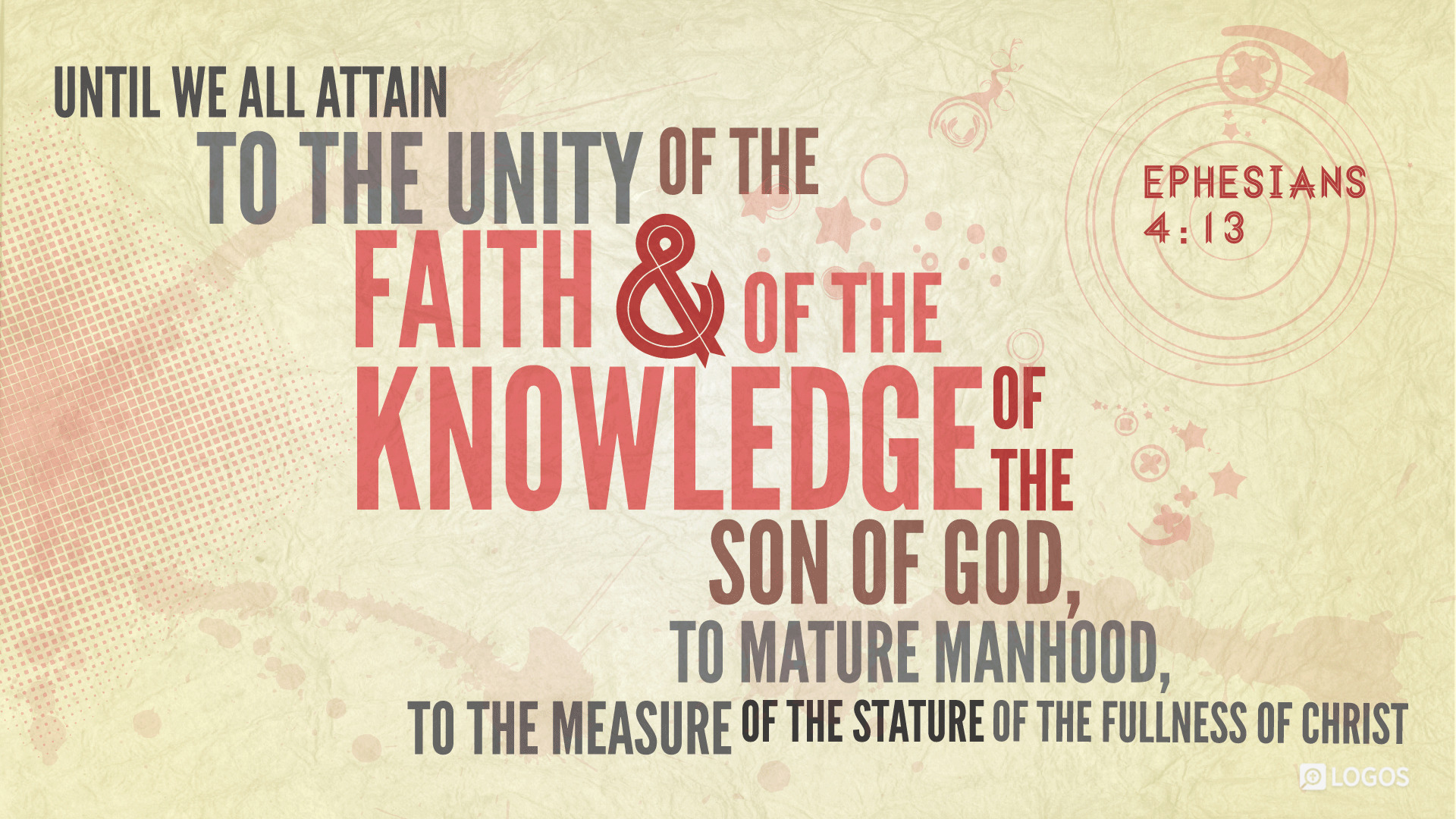
until we all attain to the unity of the faith and of the knowledge of the Son of God, to mature manhood, to the measure of the stature of the fullness of Christ
Ephesians 4:13 (ESV)
This is by no means the only place the NT teaches the importance of relationships in the Church, but the emphasis here is especially easy to see.
The purpose is to reach maturity... the "fullness of Christ."
But how do I do that?
On my own?
Spending more time with Jesus?
Well, no. At least, that's not all. Don't get me wrong; the Greatest Commandment is to "love the Lord your God with all your heart and with all your soul and with all your mind." (Matt 22:37) But that's not enough. There is a reason that the second is "love your neighbor as yourself:" You can't have one without the other.
Let's look at the rest of the passage:
4There is
one body and
one Spirit
— just as you were called to the
one hope that belongs to your call —
5one Lord,
one faith,
one baptism,
6one God and Father of all,
who is over all and through all and in all.
7 But grace was given to each one of us according to the measure of Christ’s gift. ... 11 And he gave the apostles, the prophets, the evangelists, the shepherds and teachers, 12 to equip the saints for the work of ministry, for building up the body of Christ, 13 until we all attain to the unity of the faith and of the knowledge of the Son of God, to mature manhood, to the measure of the stature of the fullness of Christ, 14 so that we may no longer be children, tossed to and fro by the waves and carried about by every wind of doctrine, by human cunning, by craftiness in deceitful schemes. 15 Rather, speaking the truth in love, we are to grow up in every way into him who is the head, into Christ, 16 from whom the whole body, joined and held together by every joint with which it is equipped, when each part is working properly, makes the body grow so that it builds itself up in love.
Ephesians 4:1–16 (ESV)
Apart from the fact that the whole picture of "Body" is one of togetherness, notice how many "unity" words there are here: "with one another... unity... bond... one, one, one... building up... unity..." Wow, do you think there's a message here? The author even says how to have unity with others: verses 2 and 3.
If you want community with people, you must have humility, patience, and love... which come from Christ.
If you want to grow up in Christ, you also have to grow together with his followers.
Friday, May 18, 2012
Learning from Matthew
Matthew study starting in June at TFC; notes about the ESV.
Attention Bible quizzers! Just because its summer, doesn't mean that you can't get a head start on next year's material. Here's some need-to-know information about our upcoming quiz season.

Attention Bible quizzers! Just because its summer, doesn't mean that you can't get a head start on next year's material. Here's some need-to-know information about our upcoming quiz season.
 1. This season covers the Gospel of Matthew
Don't just memorize; learn it and live it.
In our Summer in the Parks at TFC, we will be looking at the book of Matthew chapter by chapter. Adam will be working together with student teachers to examine the themes and lessons that set Matthew apart from the other gospel accounts. The series starts June 4 at Riverside Park in Everson, and we'll be at a different park each Monday night. Even if you aren't ready to start memorizing yet, this is a great opportunity to understand Matthew like you never have before!
Already prepping for fall?
Here's what we'll quiz on for the Kickoff Retreat on Sept 7-8 [edit] Sept 14-15:
- First-time quizzers: Matthew 4 (25 verses)
- Returning quizzers: Matthew 5 (48 verses)
2. We're switching to the ESV!
Why the change?
The NIV has never been a strict word-for-word translation. Since Greek words and idioms often don't really have an English equivalent, the translators thought it more important that the ideas be understood, and so they used a thought-for-thought (or, "dynamic equivalence") philosophy of translation. Following this translation style, when they revised the NIV in 2011, they included some changes to make some wording more gender inclusive -- for example, using "all people" instead of "all men," or "brothers and sisters" rather than simply "brothers." The NIV translators may have honestly tried to reflect what the original writers meant; but the fact is, they changed or added words that aren't actually in the original language, and sometimes this can change the meaning as well.
The Bible Quiz Fellowship committee feels this takes the "thought-for-thought" style too far, and it's important to preserve the original, inspired words that God recorded through the biblical authors. With that (and some secondary reasons) in mind, the BQF committee voted in May 2011 to adopt the English Standard Version, which is much closer to word-for-word translation. You can learn more about the decision from the statement on the BQF website.
2011 Edition
When you start studying Matthew, make sure you use a 2011 edition of the ESV by looking at the copyright date at the front of your bible. Or, just pick up a quiz book at the TFC office for $6.
Older versions of ESV (2001 or 2007), are a little bit different. Not much -- just a word here and there -- but it will be enough to throw off your word-perfect memorization for quizzing. If you already have an older ESV you'd like to study from, you can download and print this list of changes.
Older versions of ESV (2001 or 2007), are a little bit different. Not much -- just a word here and there -- but it will be enough to throw off your word-perfect memorization for quizzing. If you already have an older ESV you'd like to study from, you can download and print this list of changes.
Friday, April 20, 2012
How to Understand the Bible, Part 3 of 3
This week, we've been asking how to understand the Bible better. Best answer: Listen to the Holy Spirit first, then check your work with these questions.
 In some ways, this is the most difficult of the three "checks". For one thing, the Church has a long history, and some people dedicate their whole careers to studying the teachings of the Early Church Fathers and the development of theology over the centuries. And it hasn't developed exactly same in all parts of the Church; there are so many denominations precisely because, somewhere along the line, someone in the church disagreed about the meaning of a particular passage or doctrine, and started their own branch.
However, I believe we are called to focus more on our agreement than our disagreement (see Ephesians 4), and there is a lot we can agree on. To begin with, I hope you have a Bible-teaching church, so you have a good foundation of biblical education. (If not, perhaps C.S. Lewis' Mere Christianity would be a good start. Also, find a new church.) If you have questions about a passage or someone's teaching, don't be afraid to talk ask your pastor about it. Or for that matter, feel free to ask me; I don't have a seminary degree, but if I don't know the answer to something, I promise to find out together with you.
There a lots of ways you can research the answer on your own, too. It's not hard to find historic creeds, or statements of faith, that are accepted by every branch of the Christian Church. Bible commentaries can also be useful for understanding the theological implications of a given text. There are a lot of good ones in print, and many of the older ones are now available for free online.
All of these tools are good helps. But after everything, I would be remiss not to end where we started: the best way to study the Bible is... to study the Bible. There is no substitute for careful, broad, and frequent reading of the Word of God.
What about you? How do you make sure that what you are learning is theologically correct?
Earlier this week:
1. How does this verse fit with the rest of the Bible?
2. What did it mean to the original audience?
3. How has it been traditionally understood by the Church throughout history?
You've probably heard this before: Anytime someone says they have a fresh/new/innovative teaching of Scripture, you should run the other way. It's one thing to have a fresh understanding of traditional teaching; it's important to renew and dig deeper into the truth the Bible offers. It's quite another thing to "find" new teachings in the Bible that don't line up with doctrines that the universal Church has long held. That's why, even in personal study, you should ask how the Church as historically understood a topic or passage.
However, I believe we are called to focus more on our agreement than our disagreement (see Ephesians 4), and there is a lot we can agree on. To begin with, I hope you have a Bible-teaching church, so you have a good foundation of biblical education. (If not, perhaps C.S. Lewis' Mere Christianity would be a good start. Also, find a new church.) If you have questions about a passage or someone's teaching, don't be afraid to talk ask your pastor about it. Or for that matter, feel free to ask me; I don't have a seminary degree, but if I don't know the answer to something, I promise to find out together with you.
There a lots of ways you can research the answer on your own, too. It's not hard to find historic creeds, or statements of faith, that are accepted by every branch of the Christian Church. Bible commentaries can also be useful for understanding the theological implications of a given text. There are a lot of good ones in print, and many of the older ones are now available for free online.
All of these tools are good helps. But after everything, I would be remiss not to end where we started: the best way to study the Bible is... to study the Bible. There is no substitute for careful, broad, and frequent reading of the Word of God.
What about you? How do you make sure that what you are learning is theologically correct?
Earlier this week:
1. How does this verse fit with the rest of the Bible?
2. What did it mean to the original audience?
Thursday, April 19, 2012
How to Understand the Bible, Part 2 of 3
 The Bible is God's love letter to us. When we read it, we should first and foremost ask the Holy Spirit to speak to us through it. But relying on only our own individual perception can lead to poor interpretation; there are three questions we can ask to make sure our understanding is correct.
2. What did it mean to the original audience?
Even though the Bible contains God's message for us, it wasn't originally written to us.Different situations
When you read "Count it all joy when you face all kinds trials" (James 1:2), is God talking to you about how you should respond to your little sister bugging you, or your internet going down? Well, maybe (especially if your response needs work). But when you stop to think that the people to whom James wrote (and 200 million Christians today) were literally thrown out of their families, and living under the threat of martyrdom for their faith... maybe your own "trials" won't seem so significant.
Each part of the Bible was written for a specific purpose, and it helps to understand that when considering what it means for us today. What sort of writing is it -- history, poetry, prophecy, personal letter? What was the author (or the recipient) going through at the time? Most Bibles have an introduction to each book that help you answer these questions and deepen your understanding.
Different times and cultures
The first readers of biblical writings would have a much different understanding about how the world works. After all, it was written over a span of ~3500-2000 years ago, in many distinct political and geographical settings that were quite different from ours. A good study Bible or Bible guide can go a long way in helping us appreciate what topics like this would have meant to the people first hearing it.
Different languages.
 It shouldn't be any surprise that the Bible was written in Hebrew (Old Testament) and Greek (New Testament). Thanks to the many English translations we now have, you don't have to be a biblical languages scholar to study the Bible. But these days, all kinds of books and online tools allow you to dig into the original language and try to understand better what it means. But use caution -- translating is tricky business!
Even if you leave the translating to the experts, it's important to remember that no Bible version is perfect. When doing serious study of a passage, it's always a good idea to read it in at least a couple of different translations, using different styles -- one using word-for-word (like ESV or NASB), one or more with thought-for-thought (e.g., NIV, NCV, or NLT).
Have you ever suddenly understood a Bible reference because of something you learned about the language or historical background?
Yesterday: 1. How does this verse fit with the rest of the Bible?
Tomorrow: 3. How has it been traditionally understood by the Church throughout history?
Wednesday, April 18, 2012
There's no such thing as a Bible verse | How to Understand the Bible, Part 1 of 3
Every encounter with the Bible can be a deeply personal experience in which the Creator speaks directly to your heart. But how do you know that what you're hearing is really the Holy Spirit? There are three questions you can use to make sure you understand correctly.
1. How does this verse fit with the rest of the Bible?
Here's a brain-bender for you: Bible verses don't really exist. To be sure, God inspired the writers of the Bible with His own Word; but the verse numbers (and chapters, too) were added centuries later, by men who wanted an easy way to find a certain quote, or create a list of where to find a certain word.Verses were never meant to be clipped out and read by themselves. It's too easy to take a single line out of context, and make it seem like it means something else. For example, look at this line from Romans 5:14:
Nevertheless, death reigned from the time of Adam to the time of Moses...Now, you could read that and think, there was no death after Moses. I could even make the argument that since God gave Moses the Law, he gave the means to live a righteous life, to escape spiritual death. But you only need to read a few verses more to see that Paul's point is exactly the opposite -- "law was given so that all people could see how sinful they were" (Rom 5:20, NLT).
You can get into even more trouble when you start pasting together verses from different parts of the Bible. So when you read a Bible verse that catches your eye, ask yourself, how does it fit in the rest of the chapter or section? How does that passage contribute to the overall story of the book, or the message of the letter?
Finally, how does it makes sense in light of the rest of the Bible? What are the Old Testament promises that you find fulfilled in the New Testament? Where do you find foreshadowing of Christ in the Old Testament? Where do you find two different authors saying the same thing? What are characteristics of God you see coming up over and over again?
As has been said many times before, "Scripture interprets Scripture." Whenever you discover something in the Bible you've never noticed before, it's always best to see how your new insight lines up with the rest of the Good Book.
What are your tips for studying the Bible? Leave a comment below!
Later this week:
2. What did it mean to the original audience?
3. How has it been traditionally understood by the Church?
Monday, January 16, 2012
How can I help someone who struggles with depression?
Fighting hopelessness as we approach the “most depressing day of the year.”
At last week’s question box night at TFC, we received this question:
How do you help someone, who struggles with depression and doesn’t want to live anymore, realize God’s purpose for their life?
Finding God’s purpose for your life is always a tricky subject; how can I know for sure what God’s plan is for me? How do I know what the right decisions are? There are a number of methods that can help, including prayer, Bible study, and guidance from a trusted Christian mentor; and often, there is no definitive answer. This is a huge question that deserves its own discussion another time. Maybe, for this case, we don’t need to help them find what, exactly that purpose is; just to affirm that there is a purpose.
How can I tell if someone is depressed?
Everyone has a hard day or week every now and then. Depression goes way beyond that; it’s this sense of hopelessness, feeling trapped with no chance of escape. Depressed people feel like they have no purpose, and struggle with finding motivation to accomplish even the most basic tasks.
Some warning signs to look for:
- Withdrawal from friends, family, and regular activities.
- Spending an excessive about of time on the internet, video games, or watching TV.
- Major changes in sleeping or eating patterns (i.e., a lot more or a lot less than usual)
- A drop in school grades.
- Extreme sensitivity to rejection or failure.
- Not enjoying activities they used to like.
- Always feeling “bored” or low-energy.
What can I do to help?
Listen. One of the most important things you can do it just be there. Do your best to understand how they are feeling, and let them know that you hear them.
Read the Bible. It can be uplifting to read passages like Jer 29:11 or Ps 42:5 that promise God’s joy and his purpose for your life. However, be careful that you don’t use these verses to say “See, you shouldn’t be feeling this way…” The last thing you want is to make them feel guilty for being depressed!
It can be just as helpful to read passages of people who had it hard; it tells them that they aren’t alone, that others have gone through the same thing and survived it, and God is also here now to help them through it. Psalms 38 and 86 are great places to start, and the Book of Job is also wonderful.
Pray. Ask God for relief from this burden, or that He would give the strength to withstand it; this is a response we see many examples of in Scripture (Lk 22:42, 2 Cor 12:9, 1 Cor 10:13, Ps 38:1-18).
Confession can also free them from the weight of guilt. Guilt is a common cause of depression, but the Good News of Jesus is that we can turn from sin and live free from guilt (Heb 10:22). If they have sin they want to confess to you, let them bring it up; never force it out of them. Then listen, pray with them, and then affirm to them that they have been set free, indeed!
Encourage. Build them up by reminding them of what they are good at, things they’ve succeeded in, and the people that love them. You can also remind them that even though you know things are tough right now, this too, shall pass. Things will get better!
Do something! Get them out of the house; try a new hobby; anything to break them out of the “world of me”. Physical activity is proven to help fight depression; so is taking interest in others, such as charity work, or tutoring.
A Final Note
Get professional help if you need it. If the suggestions above don’t help, they may be clinically depressed, in which case they may actually have a chemical imbalance in the brain.
If you are worried they might take their own life – especially if they have talked about how they would do it – don’t keep it to yourself. Even if they make you promise to keep it secret, it doesn’t matter; they aren’t thinking straight, and it’s more important to get them the help they need. Talk to someone you trust, or contact the National Lifeline.
What are some other ways you can beat the winter blues?
Monday, June 13, 2011
The Life of Peter
Peter means “the Rock;” but Simon was anything but a rock before Jesus changed his life.
 Peter was from Bethsaida (Jn 1:44), a small town on the shore of the Sea of Galilee. On the west side of this large lake was the region of Galilee, which was settled mostly by Jewish people, living under the rule of the Herods – the supposedly Jewish family who had sold out to the Romans, governing Judea as a puppet state of the Roman Empire. Visible on the opposite side of the lake were some of the cities of the Decapolis – these Greek cities also served as a base for Roman legions, and would have been a stark contrast to Peter’s simple Jewish life.
Bethsaida literally means “fish house,” which gives you a clue about what its main income was. Like many others in the area, Peter and his brother Andrew earned their living at the family business: fishing. Just like many fishermen today, they were uneducated (Acts 4:13), hard-working, blue-collar workers, who were often crude (Peter was a self-described “sinful man,” Lk 5:8), and prone to causing trouble (James and John, Peter’s business partners, were nicknamed the “Sons of Thunder,” Mk 3:17). 
Imperfect as he was, Peter is also something of a leader. He is always listed first among the Apostles, and often speaks on behalf on their behalf when they want to ask Jesus something. When the disciples fall asleep at Jesus’ last night, only Peter is singled out for taking responsibility. Even after Jesus’ resurrection, Peter is the one who says “I’m going fishing,” and the other disciples follow his lead.
Early on, Peter becomes part Jesus’ inner circle, even within the Twelve. Only Peter, James, and John were present at several key moments of Jesus’ ministry:
- when Jairus’ daughter was raised (Mk 5:37; Lk 8:51)
- at the transfiguration (Mt 17:1; Mk 9:2; Lk 9:28)
- in the Garden of Gethsemane (Mt 26:37; Mk 14:33)
- He is brave enough to step out of the boat onto the water towards Jesus, but almost immediately loses his faith. (Mt 14:29-39)
- Peter proclaims Jesus to be the Son of God (Mt 16:15-16), and moments later proceeds to tell him what to do (Mt 16:22).
- In John 13, he first refuses to allow Jesus to wash his feet, and when Jesus insists, wants him to wash him all over!
 And then, of course, is Peter’s most famous failing of all – his denial of Jesus. John’s gospel gives us a unique, eye-witness insight to this story: Peter first declares that he will follow Jesus to the death, and even attacks a servant of the high priest to defend his Lord.
But after Jesus is taken, Peter – typically – swings to the opposite extreme; afraid of being arrested himself, and follows at a distance to the house of the high priest Caiaphas, and his father-in-law Annas (a former high priest himself). And as Peter is outside, waiting to hear what will happen to his Lord, nervous about his own fate… you know what happens. Three times, someone recognizes him as disciple, and three times he denies it. Forget going in to the courtroom, never mind testifying before Annas, Caiaphas, and the Sanhedrin -- he is so afraid of being associated with Jesus, he doesn’t even want to admit that he’s a follower to a teenage servant girl.
But the story doesn’t end there; after Jesus restores his relationship with Peter (Jn 21:15-18), and charges him to “feed my sheep,” we see a very different Peter. In Acts 3-4, Peter and John find themselves in trouble with the Jewish authorities after publicly healing a paralytic and preaching Christ at the Temple. And look who comes to deal with them:
They seized Peter and John, and because it was evening, they put them in jail until the next day. … The next day the rulers, elders and teachers of the law met in Jerusalem. Annas the high priest was there, and so were Caiaphas, John, Alexander and the other men of the high priest’s family. They had Peter and John brought before them and began to question them: “By what power or what name did you do this?”
Then Peter, filled with the Holy Spirit, said to them: “Rulers and elders of the people! If we are being called to account today for an act of kindness shown to a cripple and are asked how he was healed, then know this, you and all the people of Israel: It is by the name of Jesus Christ of Nazareth, whom you crucified but whom God raised from the dead, that this man stands before you healed. He is
“ ‘the stone you builders rejected, which has become the capstone.’
Salvation is found in no one else, for there is no other name under heaven given to men by which we must be saved.”
Acts 4:3-12, NIV
(emphasis added)
(emphasis added)
The contrast is amazing – not only is Peter now willing to speak boldly, he does so to the very men who put Jesus on the cross! In the very next chapter, they are in trouble again, and challenge the priests – who could kill them just like they did Jesus – “We must obey God rather than men!” When Peter and John narrowly escaped with their lives, receiving a flogging instead,
The apostles left the Sanhedrin, rejoicing because they had been counted worthy of suffering disgrace for the Name.
Ac 5:41
Before writing his letters near the end of his life, Peter grows the Church, pastors those in the Way, and spreads the Good News through missionary journeys. He was executed for his faith by Emperor Nero in AD 67-68, by crucifixion. And while there is no way to know for sure, legend has it that when Peter was told how he was to be executed, he asked to be crucified upside-down, because he didn’t consider himself worthy to die the same way as his Lord.
Peter lived and died a far cry from his beginning as a country bumpkin who abandoned his Master when it mattered most.
Discussion Questions:
- How do you think Peter (and the other people of Galilee) felt about where they grew up?
- Why do you think Jesus called a lowly, coarse fisherman as his chief disciple?
- What made Peter so different in Acts than he was in the Gospels?
- What would it take for God to change you so dramatically?
Thursday, March 31, 2011
Dinosaurs, Haters, and Free Will
 |
| Click for larger image |
Questions we discussed:
1. How do you handle a person who hates on you and can’t let it go, how do you handle haters in a Christian way?
2. Should all of the stories in the Bible be taken literally? (Noah’s ark, the Garden, etc)
3. If dinosaurs were around before people, and God made people on the 6th day, does that make dinosaurs fake?
4. Did Jesus sacrifice any animals in His lifetime?
5. My pastor talks a lot about singling out a day every once in a while, fully dedicated to praying. What are your thoughts on that?
Questions we'll tackle next week:
1. When is someone considered Christian? How can I help people know or realize they are? On a sort of off topic side (could these be linked?), how do I /we help someone who has authority over other people but has trouble having them actually listen to them?
 |
| This is following the example of Jesus? |
2. How do you respond to hatred toward Christianity? People who have had a bad experience with someone and are taking it out on the entire religion? How do you respond to people who believe that religion may as well be the pinnacle of evil? That those who are religious are all ignorant?
3. How do you deal with Christians who have so much hate? Christians who hate homosexuals, and adulterers, just about every sinner… How do you deal with the Christians who make other hate Christianity?
3. How do you deal with Christians who have so much hate? Christians who hate homosexuals, and adulterers, just about every sinner… How do you deal with the Christians who make other hate Christianity?
4. How come there is so much killing for God’s purpose when he commands us not to? (Jael killing Sisera, Judges 4:21; the [killing of all the city’s residents at the] fall of Jericho)
5. What happens to those who are ignorant, children, people who were never reached by the Gospel? Do they find the Kingdom of Heaven?

6. Why did Jesus get baptized?
7. Where did natural evil originate (hurricanes, floods, earthquakes)?
8. Why did God make the Tree of the Knowledge of Good and Evil when He knew Adam and Eve would sin?
9. How is the idea of God having a “plan,” “using people,” or having “complete control” over all life align with the idea that we have a free will?
Tuesday, March 1, 2011
The World is Ending Tomorrow
If you want to understand the Bible, don't look for hidden messages; believe that it says what it means. Believe it has something to teach you about how you actually live your life.
Last night's lesson got postponed when the discussion turned toward Judgment Day -- which, despite some misconceptions, is neither a cyborg invasion nor a professional wrestling smackdown. The End Times discussion has been getting a lot of attention lately, due to billboards and signholders which have popped up all over the county and the country.
 |
| Billboards like this one have been popping up in Whatcom County. |
- Premise One: God's Judgment Day is going to come exactly 7,000 years after the Great Flood.
- God told Noah that the Flood (ie, his judgment) would come in 7 days, on the 17th day of the 2nd (Biblical) month. (Gen 7:10-11)
- 2 Peter 3:8 tells us that with the Lord, "a single day is like a thousand years and a thousand years are like a single day."
- Premise Two: We can learn by "careful study" of genealogies in the Bible that the Flood happened in 4990 BC.
- Conclusion : 4990 + 2011 – 1 = 7,000 = Judgment Day will come on May 21, 2011.
Is It True?
First of all, this is nothing new; people have predicting Christ's return ever since he left. Obviously, none of those have been right, and the Bible is very clear that "no one knows that day or the hour" (Mt 24:36 / Mk 13:3; see also Mt 25:13; Ac 1:7; 1 Th 5:1-2; 2 Pe 3:10). But is it possible that the clues above have been in the Bible all along, just waiting to be solved? There is so much wrong with this logic, I almost don't know where to start; every step of the argument is flawed. Let's just focus on one:
When Peter says "a thousand years are like a single day," he doesn't mean that this is a decoder ring for understanding God's time; all you have to do is read the context to realize that his point is just the opposite! For starters, look at the rest of the sentence: it goes both ways. To paraphrase,
One of your days is like a thousand years to God, and
a thousand of your years are like a single day to God.
Does that make any sense? No, it doesn't. Not to us, anyway, and that's the point: God lives on a different level of reality, and his time is not like our time. (Actually, remember, even our time is not like our time.) Peter isn't saying anything here about how the word "day" is used anywhere else in Scripture.
You can't just snip sentences out of the Bible and make them mean what you want them to mean; take the time to understand the message of the writer. Claiming that the Bible "guarantees" judgement on May 21 will only damage the credibility of the Bible (and believers) when May 22 rolls around.
How Should We Be Ready?
What bothers me even more, though, is the attitude this reveals in Christians. It's very easy to slip into a mindset that's dismissive, skeptical, or even mocking. "Jesus is coming?" we think, "Yeah, right. I hope there's something good on TV tonight." Yeah, we don't know that Jesus is coming on May 21. But we don't know he isn't, either.
The whole reason that Peter writes this is to warn the believers that they need to be ready. It's the same reason that Jesus tells the parables of Mt 24:36-25:13. If you knew when He was coming, of course you will be ready! But since you don't know, it could be any moment. You need to be ready all the time.
Katie raised an excellent question: How do we be ready? Jesus answers that question, too. He continues to teach, through the parable of the talents, that God has invested us with certain gifts, that we should use our lives for his glory. He goes on to spell out exactly what is expected from us:
When someone wants to debate when the Lord will return, understand that it doesn't really matter. Tell them that you are doing the best you can, every day, to live a life that honors God and cares for others. If you really are, then they will have no answer to that.
And if you aren't caring for "the least of these"... read to the rest to see if you are really following Jesus.
Katie raised an excellent question: How do we be ready? Jesus answers that question, too. He continues to teach, through the parable of the talents, that God has invested us with certain gifts, that we should use our lives for his glory. He goes on to spell out exactly what is expected from us:
“Then the King will say to those on his right, ‘Come, you who are blessed by my Father; take your inheritance, the kingdom prepared for you since the creation of the world. For I was hungry and you gave me something to eat, I was thirsty and you gave me something to drink, I was a stranger and you invited me in, I needed clothes and you clothed me, I was sick and you looked after me, I was in prison and you came to visit me.’ “Then the righteous will answer him, ‘Lord, when did we see you hungry and feed you, or thirsty and give you something to drink? When did we see you a stranger and invite you in, or needing clothes and clothe you? When did we see you sick or in prison and go to visit you?’ “The King will reply, ‘I tell you the truth, whatever you did for one of the least of these brothers of mine, you did for me... ’ (Matt 25:31-46)Jesus taught that the greatest commandment is a love God with everything, and second is to love your neighbor as yourself. With these words, he combines them; your love for Christ is revealed by how you treat others. It's in how you spend your time. It's in how you spend your money. It's in how you live your life.
When someone wants to debate when the Lord will return, understand that it doesn't really matter. Tell them that you are doing the best you can, every day, to live a life that honors God and cares for others. If you really are, then they will have no answer to that.
And if you aren't caring for "the least of these"... read to the rest to see if you are really following Jesus.
Wednesday, January 19, 2011
Hardening Pharaoh's heart: God's influence on our free will
 In response to our 90-Day Challenge to the read the whole Bible, we had some great questions on Monday night. What does it mean that "God hardened Pharaoh's heart"? Does God sometimes override our free will for his own purpose? And if so, is it really free will?
But I will harden Pharaoh’s heart, and though I multiply my signs and wonders in the land of Egypt, Pharaoh will not listen to you. Then I will lay my hand on Egypt and bring my hosts, my people the children of Israel, out of the land of Egypt by great acts of judgment.
Ex 7:3–4, ESV
The Problem
This passage, and the twenty other references to Pharaoh's hard heart in the following chapters, have long been concerning to critics, and even some believers. It seems to imply that God will force the king of Egypt to make a sinful decision, and then punish him for it -- ultimately killing him and his whole army in the sea. If so, this is the height of injustice; even more disturbing, it would mean that God can revoke our free will at any time -- which really is no free will at all.
Who hardens his heart?
Joel's answer on Monday is a good place to start: it's vital to note that Pharaoh first hardens his own heart. The first place we see any reference to hardening is Exod 4:21; but in this verse, God only tells Moses what is going to happen, at some point in the future. The first time we see Pharaoh's heart actually hardening, he does it on his own, with no help from God. And in fact, he does six times in a row!
From the Bible Knowledge Commentary:
...in the next seven references Pharaoh is said to have hardened his own heart (Exod 7:13-14, 22; 8:15, 19, 32; 9:7) before God is said to have hardened it (Exod 9:12; 10:1, 20, 27; 11:10; 14:4, 8). God’s first hardening came after the sixth plague. Pharaoh hardened his own heart six times by his refusals. Then later he hardened it again in response to the seventh plague, and God hardened his heart after each of plagues 8-10.
As a side note, it's significant that there are seven references in each case; numbers often (but not always) have symbolic meaning in the Bible, and seven is the number of fullness. Pharaoh is fully committed to harden his own heart, apart from any action that God takes.
"Strengthen"
But does the fact that God also "hardens" his heart take away from Pharaoh's free will? I don't think so. If you look at the translator's note on 4:21 in the NET Bible, you'll find an important insight to the word usually translated "hardened":
tn Heb “strengthen” (in the sense of making stubborn or obstinate). The text has the expression (va’ani ’akhazzeq ’et-libbo), “I will make strong his will,” or “I will strengthen his resolve,” recognizing the “heart” as the location of decision making (see Prov 16:1, 9).
This implies that God is making stronger the intent that Pharaoh already had in his heart; rather than making the choice for Pharaoh, God confirms the choice that Pharaoh has already made.
Responding
Pharaoh's heart is hardened both as a result of his own decision and God's action. To look at it in another sense, God influences Pharaoh's heart simply by giving him instructions. Anytime anyone is told what to do, they will have one of two reactions in their heart: either they will listen and obey, or they will be stubborn and refuse. Sometimes, depending on what they are being told to do, being stubborn is a good thing. Other times, what they are told is for their own good, and they refuse simply for the sake of refusing. And, as anyone who has ever put a toddler to bed knows, the more they are told to do it, the more stubborn they become. Every time God repeated his command to Pharaoh, it made him more resolute not to comply.
This true for all of us; what has God prompted you to do? Have you responded with obedience, or have you hardened your heart against his voice?
Wednesday, January 12, 2011
The 90-Day Challenge
It's Day 2 of our challenge to read the whole Bible in three months. It's not too late to join us! Here are some tips for staying focused on our goals.
 Reading the whole Bible in 90 days is more than an idle attempt to see if we can do it. And it isn't about checking off a list so that we appear more righteous before God or our friends -- or, conversely, feeling guilty over failure if we don't make our goals.
Don't worry too much about "getting behind." Yes, we want to challenge ourselves, and that's the reason we are following a reading plan in the first place. But don't be so focussed on "staying on track" that you lose sight of our real goals:
Goal 1: To gain an understanding of THE OVERALL STORY OF SCRIPTURE and a MORE COMPLETE PICTURE OF GOD.
I encourage you to do your reading from a Bible with study notes, that you can refer to for things that don't make sense to you. Or for online reading, I recommend the New English Translation (NET), which includes translators' notes (t) and study notes (s) to help you understand better.
For each story, ask yourself, "What does teach me about God's character? about the plan that he has for the world? about human character? about me?"
Goal 2: To have a DAILY DISCIPLINE of spending time with THE LORD AND HIS WORD
Don't just read for the sake of reading; ask the Lord to open your heart to what he has to teach you. Share your problems with him; pray for unbelieving friends. Keeping a journal is another great way to record what God is teaching you.
Goal 3. To CONNECT with other believers through A COMMON EXPERIENCE
Something powerful happens when people do things together, and there are several ways YouVersion.com helps us do that.
1. Accountability. Find a partner to encourage you and can discuss what you've been reading. YouVersion can also be set to automatically email a friend whenever you do your reading.
2. Notes. You can add notes to verses you find interesting, inspiring, or confusing. You can find your friends' notes under My>Friends' Activities.
3. Connections. Connect to your Facebook/Twitter account, and share your favorite verses with your friends.
I'm really excited to see where this leads. Please be praying with me!
Adam
Wednesday, October 27, 2010
Meditation: Introduction to Spiritual Disciplines
Throughout this year, we will be looking at many of the Spiritual Disciplines; last week, Adam V introduced us to them by examining the discipline of meditation.
 |
| photo by Joe Shlabotnik on Flickr |
Spiritual Disciplines rarely get talked about among America’s churches. If I asked you name a few, you would probably name praying and reading the Bible, and maybe even fasting; and not that these are unimportant, but that’s usually all we ever hear about. Disciplines like solitude, service, and simple living get much less airtime, but they can be vitally important.
What is a spiritual discipline, and does it matter? They are tools that we have to strengthen our spiritual muscles. We do not use them to change ourselves by our own strength, but they are indispensible methods of allowing God’s power to transform our lives.
Meditation, in some ways, opens the door to the other Disciplines, because it teaches us how free our minds from distraction and listen for God’s voice. Here's Adam V's lesson:
What is Christian Meditation? (And What it is Not?)
When a lot of people hear the word ‘meditation’, they might think of relaxing and doing nothing. People may say that it helps you get in touch with your inner self or spirit, or helps relieve stress. When I looked up the word ‘meditate’ in the dictionary, it said, “To think deeply”. But we as Christians (when we meditate) are not supposed to just ‘think deeply’; it is about thinking deeply about, to, and on God. Meditation is different from prayer because you aren’t asking for his blessings or confessing your sins. The definition of biblical/Christian meditation is “The ability to hear God’s voice and obey His word.”
The differences between worldly meditation and that of the Christian variety are this: worldly meditation is an attempt to empty the mind and Christian meditation is an effort to fill the mind; filling the mind with things of God. Those are two very diverse thoughts.
A common misconception of meditation is that meditating is too hard and too complex. They say it is best left to the professionals. To the contrary, meditation is said to be a natural human action. Something even I can do.
What Prevents Us From Meditating on God?
Ways that keep us from meditating ourselves are things such as busyness, thinking it is too difficult, being uneducated about it, leaving it to the ‘spiritual giants’, and thinking that it is simply weird.
Why is Meditation Important?
Christian meditation is important because…
· It reveals who God is.
· It helps you understand Scripture.
· It calms you.
· It brings you closer to God.
· God speaks to us through meditation.
Meditating on God reveals who He is and what He has to say to you. You can’t hear what He has to say if you aren’t listening to Him.
Meditation connects us to God in ways prayer and reading the Bible does not allow us to.
The truth of the matter is, God desires our companionship. Meditation allows us to, in a way, walk with him as a friend walks with a friend.
The following verses are some situations where meditation comes up in the Bible.
1 Kings 19:7-14
Joshua 1:8
Psalm 1:2, 19:14, 104:34, 119:15&78&97, 145:5
In these circumstances, they are meditating on the Law of God and on the Works of God.
There are also some circumstances where Jesus has gone away from the crowds for purposes that include prayer and probably meditation as well.
How Should You Meditate?
You cannot properly learn to meditate on God just by reading about it in a book, by watching a ‘how to’ DVD, or even by listening to me. You learn how to meditate by, well, meditating.
Meditate When?
Well from what we read earlier the answer is “day and night or all the day”, but with schooling and other activities it is difficult to devote your entire day and night to meditating. That being said, the best time to meditate is at a time when you have a clear mind free of distraction and you can put full effort of thought into meditative matters. It’s difficult to be in a peaceful state of mind when your thoughts are constantly jumping from different things you need to do when you are done meditating.
Meditate Where?
The best location to meditate is at a place of few distractions. Distractions, such as, phones or (in some cases) people, should not be present. Some people prefer to meditate in the great outdoors, where God’s immense creation is most evident, with trees and birds and such.
On What Shall We Meditate?
I came up with a few things on which to meditate. The first of which is God’s creation in which God’s greatness is tangibly showcased. Looking at the clouds on a warm afternoon or the colorful leaves of autumn spikes amazement inside of me. I love watching snow cover the ground and the sound of the rain hitting the pavement.
Secondly, you can meditate on God’s word. From the verses we read earlier, the psalmists wrote a lot about meditating on the law. When you are reading the Bible, it is good to stop on a passage that means a lot to you, take a key word or phrase and let it take hold of you.
Branching off of that, I like to spend time pondering the words of a worship song or hymn. One of my favorite hymns is How Great Thou Art. The refrain and verses of that song move me. Here is the first verse of the song. “O Lord my God, when I in awesome wonder, consider all the worlds thy hands have made. I see the stars, I hear the rolling thunder, thy power throughout the universe displayed.”
I had not noticed before, but the writer of the hymn is writing about meditating on the greatness of God.
I have also read about people who like to imagine that they are in at a biblical event. Say, for example, you pretend you are one of the five-thousand Jesus fed or the prodigal son or witnessing the trans- figuration. It may help you understand the stories in a way you have not before.
Meditating on the works of God is my third and final idea that I came up with on which to meditate. We can’t take for granted everything God has done for us, but I think it is safe to say that we all do. Thinking about Jesus getting spat upon, stripped of his clothes, flogged, humiliated, and nailed to a cross should send shivers down anyone’s spine.
To sum up on all that I have said, Meditation is important in helping us take the next step in our relationships with God.
For further study on the disciplines in general, please check out these resources:
 |
| Inside Out Pt4: A sermon by CTK Bellingham Pastor Grant Fishbook |


Subscribe to:
Posts (Atom)